
Security consultancy is often talked about in technical terms, but at its core it is straightforward: it is independent expert advice that helps organisations understand their security risks and improve how they protect people, property and operations.
For UK property managers, facilities teams and building owners, security consultancy has become increasingly important. Buildings are more complex, risks are more varied, and expectations around safety, compliance and resilience are higher than ever. In this context, relying on informal assessments or “standard” security measures is rarely enough.
Cognitious, the consultancy arm of Ashridge Group, delivers specialist security consultancy services from London and across England and Wales, supporting clients in the commercial, construction, residential, corporate and public sectors.
Our leadership team combines former military personnel and ex-police professionals, alongside experts with decades of experience in the security industry. This blend of operational, investigative and industry knowledge allows us to provide practical, informed and risk-led security advice tailored to each environment.
A simple definition?
Security consultancy is the process of assessing security risks in a building or organisation and providing clear, independent recommendations on how to reduce them.
Unlike security contractors who install systems or provide guarding services, a security consultant does not typically sell equipment or staff. Instead, they focus on what is needed, why it is needed, and how well current measures are working.
In practice, this means reviewing a site, identifying vulnerabilities, and helping organisations make informed, proportionate decisions about security improvements.
Why Property and Facilities Teams Use Security Consultants
Most organisations don’t bring in a consultant because something has gone wrong—they do it to prevent problems from happening in the first place.
Common reasons include:
- Reviewing security across one or multiple sites
- Responding to incidents such as theft, vandalism or unauthorised access
- Planning refurbishments, upgrades or new developments
- Improving compliance with safety or industry expectations
- Managing higher-risk buildings or public-facing spaces
- Checking whether existing security measures are still effective
- Supporting long-term risk management and budgeting decisions
Often, internal teams are too close to day-to-day operations to spot gradual weaknesses. A consultant brings an external, structured perspective.
What a security consultant actually does?
The scope of work varies depending on the organisation and site, but common services include:
Security Risk Assessments
Although the scope varies depending on the site, most security consultancy work falls into a few key areas.
Security risk assessments
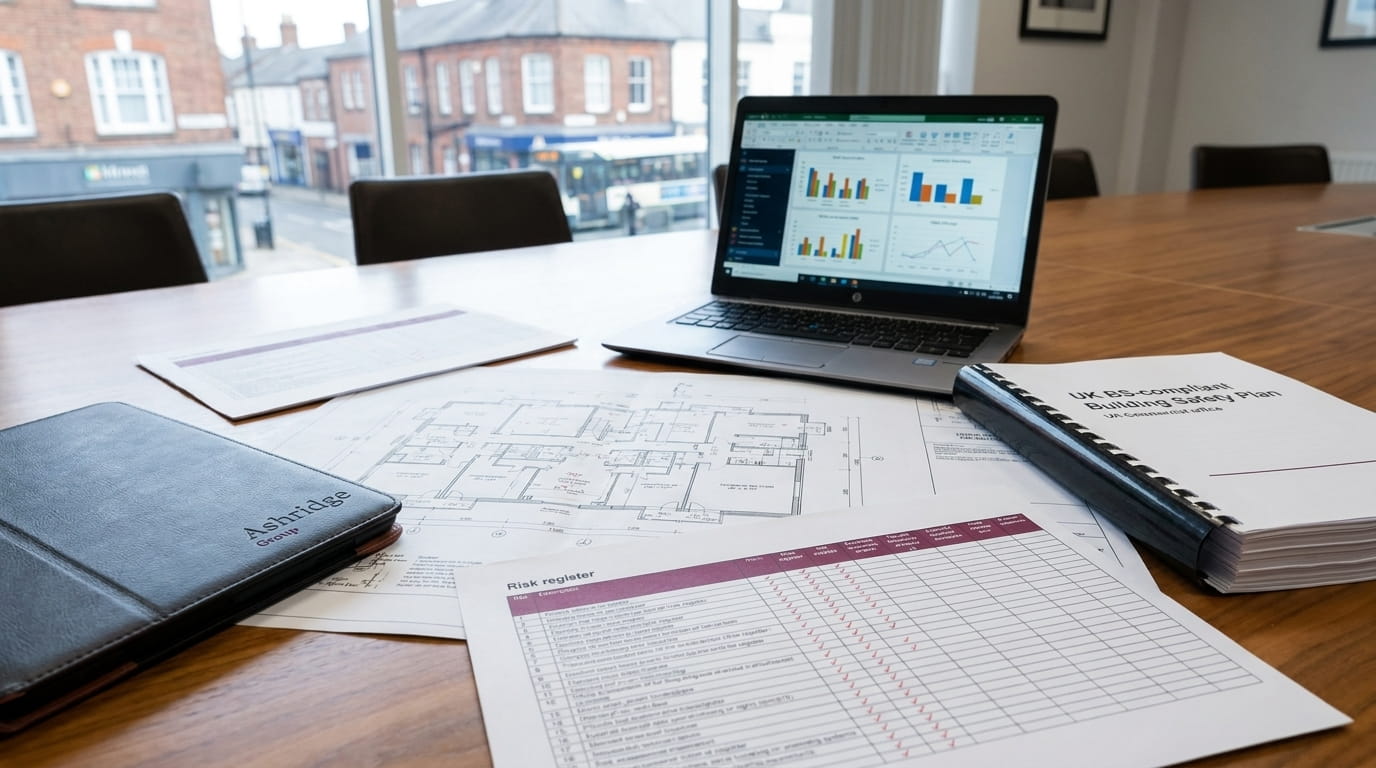
This is usually the starting point. A consultant evaluates potential threats and vulnerabilities affecting a building or estate, such as:
- Entry and exit points
- Access control systems
- CCTV coverage and effectiveness
- Lighting and visibility
- Visitor and contractor management
- Perimeter security
- Local crime patterns and environmental risks
The outcome is typically a structured report that prioritises risks and provides practical recommendations.
Security audits and operational reviews
While risk assessments focus on potential threats, audits look at what is already in place and how well it works in reality.
This can include:
- CCTV system performance
- Alarm systems and monitoring
- Key control procedures
- Security staffing arrangements
- Incident reporting and response processes
- Day-to-day operational practices
The goal is to identify gaps between how security is supposed to work and how it actually works on the ground.
Security design and “security by design”
Security consultancy is especially valuable during building design, refurbishment or change-of-use projects.
Rather than adding security after construction, consultants help integrate it from the start. This approach—often called security by design—can reduce cost and improve effectiveness.
Examples include:
- Reception layout and visitor flow
- Placement of CCTV and access points
- Secure delivery and loading areas
- Parking and perimeter design
- Physical barriers and landscaping
- Glazing and external visibility considerations
Small design decisions can have a long-term impact on how secure and easy to manage a building is.
When should you consider security consultancy?
Security consultancy is most valuable when:
- Managing multiple buildings or large estates
- Planning refurbishment or construction projects
- Experiencing repeated security incidents
- Reviewing outdated or inconsistent security systems
- Preparing for audits, compliance checks or insurance requirements
- Opening or repurposing public-facing facilities
- Reassessing budgets and long-term security strategy
It is also useful as a periodic health check, even when no obvious problems exist.
The benefits for property and facilities teams
When done well, security consultancy delivers practical outcomes rather than abstract advice.
Key benefits include:
- Clearer risk understanding – decisions are based on evidence, not assumptions
- Improved safety – better protection for staff, visitors and contractors
- More efficient spending – investment is focused where it matters most
- Better compliance – alignment with relevant standards and expectations
- Stronger resilience – improved ability to respond to and recover from incidents
Choosing the right security consultant
Not all consultants approach security in the same way. The most effective tend to share a few qualities:
- Experience with similar property types or sectors
- Strong understanding of UK security standards and practices
- A practical, risk-based approach rather than overly technical advice
- Independence from product or service sales
- Clear, actionable reporting rather than theoretical recommendations
Good consultancy should make security simpler to manage, not more complicated
Final thoughts
Security consultancy is ultimately about clarity and control. It helps property and facilities teams understand what risks actually exist, what measures are effective, and where improvements will make a real difference.
Rather than focusing only on equipment or staffing, it takes a step back and looks at the bigger picture: how a building operates, how people use it, and how well it is protected in practice.
At Cognitious we support UK property and facilities teams by providing practical, independent security advice tailored to real-world environments. From risk assessments and security audits through to design guidance and long-term strategy, we help organisations strengthen safety, improve resilience, and make confident, informed security decisions across their sites.