
A waking watch in England cost a median of £11,361 per building per month in the government’s national survey, with officers paid between £12 and £30 an hour. What your building pays depends on how many officers the fire risk assessment calls for, how long cover runs and where the building is. Set against the cost of a fire, and the cost of an alarm that can replace it, the numbers look different.
How much does a waking watch cost in the UK?
The only national dataset is the Ministry of Housing, Communities and Local Government’s survey of buildings in England, collected in 2020 and last updated in January 2021 (Building Safety Programme: waking watch costs). It found:
- Per building: a median of £11,361 a month (mean £17,897), across 71 buildings.
- London versus elsewhere: a median of £15,641 a month in London against £10,929 in the rest of England.
- Per flat: a median of £137 a month (mean £331).
- Per officer: hourly rates from £12 to £30, with a median of £13.99.
Treat these as a floor rather than a quote. Pay has risen since the survey: the National Living Wage was £8.72 an hour in April 2020 and £12.21 by April 2025, and staffing is most of what a waking watch costs.
Waking watch is sometimes called a fire watch, and the same figures apply. We don’t publish a price list, because two buildings of the same height can need very different cover. We quote per site after a short assessment.
What drives the cost of a waking watch?
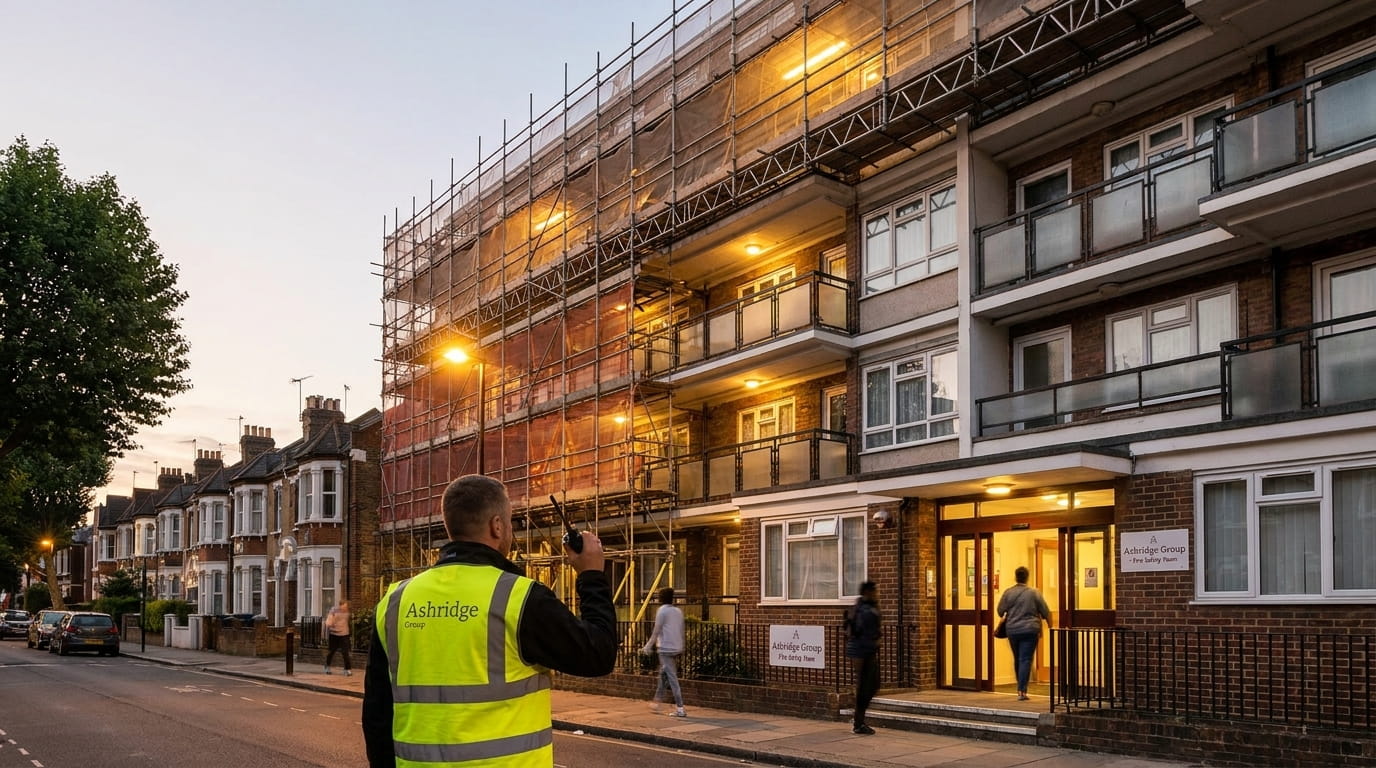
- Officers per shift. The fire risk assessment sets this, and National Fire Chiefs Council guidance doesn’t fix a ratio of officers to flats. At New Palace Place in Westminster it meant two officers per shift across six blocks.
- Hours of cover. Most waking watches run 24 hours a day, every day. One officer post covered around the clock is 168 hours a week, so each extra officer adds significantly to the bill.
- How long it runs. Cover ends when the permanent fix is confirmed. Some jobs are short: we covered Waterside Heights near Solihull for the eight days its alarm was out of service, and Burlington Gate in Walsall for ten days. New Palace Place ran for eight months.
- Building layout. Height, number of stair cores and how long a full patrol takes all change how many officers are needed.
- Location. The government data shows a London median about 43% above the rest of England.
- How fast you need it. Where a fire and rescue authority has issued a notice, cover is often needed the same day. We had officers on site at New Palace Place within four hours.
Waking watch cost vs risk: what is the alternative?
The honest comparison isn’t a waking watch against nothing. When a fire risk assessment says a building can’t rely on its fire safety systems, the responsible person has a duty under the Regulatory Reform (Fire Safety) Order 2005 to act. Leaving the building without interim measures means accepting the risk to residents’ lives, legal and insurance exposure, and the cost of moving residents out if the fire service decides the building isn’t safe to occupy.
The real alternative is a common fire alarm, and it is usually the cheaper one. The government’s own analysis found that the cost of employing one person on waking watch duties exceeds the average cost of installing an alarm system within three to seven months. In the case study it published, alarms for a 191-flat building cost £96,000 wired or £112,000 wireless, against two officers per block around the clock. That is why the National Fire Chiefs Council expects a waking watch to be replaced by an alarm as soon as it is practical.
Is there funding to replace a waking watch with an alarm?
Yes, for residential buildings in England. The Interim Measures Alarm Fund, run by Homes England, has replaced the earlier Waking Watch Replacement Fund. It pays for a common fire alarm, generally a BS 5839-1 Category L5 system, in buildings with two or more homes where the fire risk documentation identifies the need for interim measures. The building owner or responsible person applies; leaseholders and residents can’t apply directly. Check the Interim Measures Alarm Fund guidance on GOV.UK for current eligibility before you budget.
Who pays for a waking watch?
It depends on the building and the defect. The Building Safety Act 2022 limits what can be recovered from qualifying leaseholders, and in some cases the cost can be recovered from the parties responsible for the defects instead. Our waking watch service page sets out how that works. Take advice before signing a long contract, because the answer often changes the commercial picture.
How do we keep waking watch costs down?
- We set officer numbers against your fire risk assessment, not a standard rota.
- Where an alarm is coming, we plan the handover from day one, so you aren’t paying for staffed cover longer than you need to.
- We stand down as soon as the permanent measure is confirmed. At New Palace Place that was 15 December 2025.
- Every round is logged, so your fire risk assessor and fire authority can see the cover is working without extra checks.
Our officers are trained fire marshals, not security guards, because a waking watch is a fire safety role. See our waking watch service for what cover includes, or read what property managers need to know about waking watch requirements.
Frequently asked questions
In the government's survey of buildings in England, waking watch officers cost between £12 and £30 an hour, with a median of £13.99. That data was collected in 2020 and pay has risen since (the National Living Wage went from £8.72 to £12.21 an hour between April 2020 and April 2025), so current rates are higher. The total depends on how many officers the fire risk assessment requires.
The same government survey found a median of £11,361 per building per month, or £137 per flat. London buildings cost more, with a median of £15,641 a month against £10,929 in the rest of England. A small building needing one officer will cost far less than a large block needing two officers on every shift.
Often, yes. Fire watch is a common alternative name for a waking watch: trained officers patrolling a building continuously to detect a fire early and raise the alarm. The term is also used for fire cover during hot works on construction sites, so check which one a quote describes. The cost drivers are the same: officer numbers, hours and duration.
Usually. Government analysis found that employing one person on waking watch duties exceeds the average cost of installing an alarm system within three to seven months. The Interim Measures Alarm Fund, run by Homes England, can pay for a common alarm in eligible residential buildings in England, which then allows the waking watch to stand down.