
If you manage a residential building with fire safety concerns — or you’re a developer working on a site awaiting building control sign-off — you may have been told you need waking watch. Property managers, developers, and housing providers ask us this every week.
Before we go further: you may also hear the term walking watch used on-site and in some procurement documents. In the UK fire safety industry, the correct term is waking watch — a team of trained officers present on-site to detect fire and coordinate evacuation around the clock. We use “waking watch” throughout this guide, as that is the recognised regulatory term.
This page covers what waking watch is, when UK regulations require it, what responsible persons must do, and how to make sure your provider meets the standard.
When Do You need Waking Watch in the UK?
Waking watch is typically triggered by one of the following situations:
Your building has a stay-put evacuation strategy that has been suspended. If a fire risk assessment identifies that residents cannot safely remain in their flats during an emergency, the local fire and rescue service can take enforcement action under the Regulatory Reform (Fire Safety) Order 2005 to require the responsible person to deploy a waking watch team immediately.
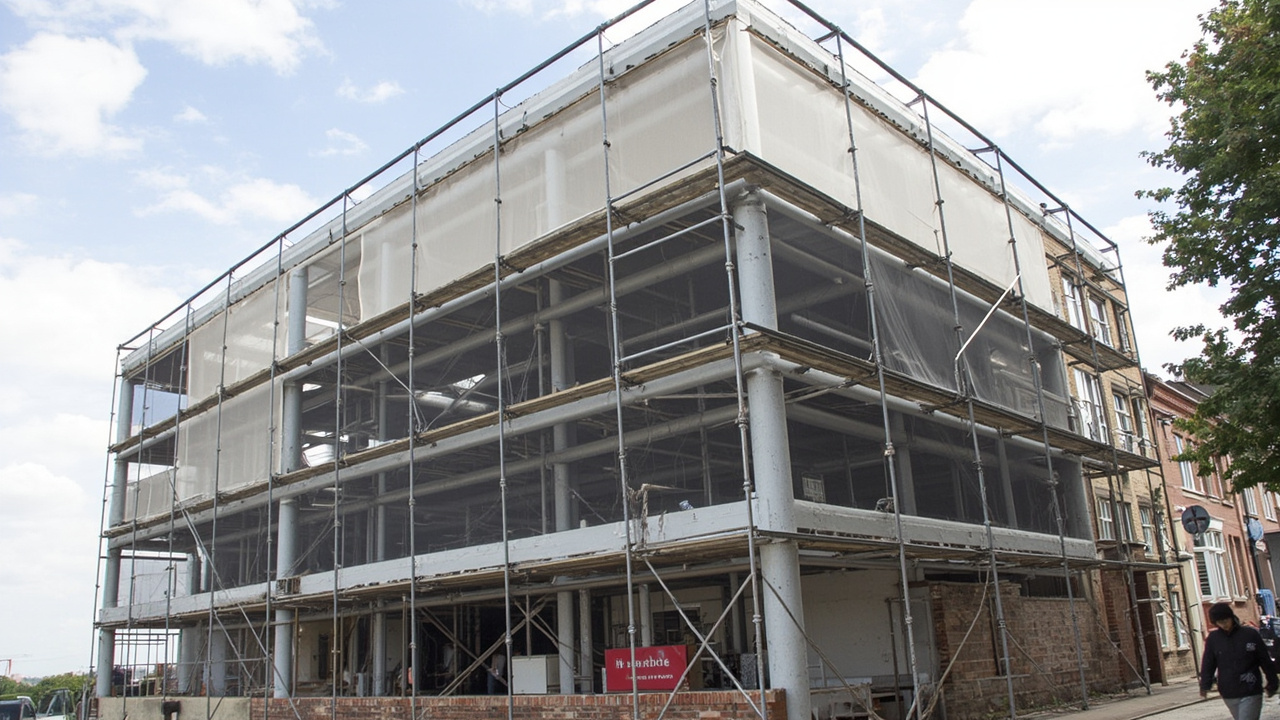
Your building is undergoing remediation works. Following the Grenfell Tower tragedy and the subsequent Fire Risk Appraisal of External Walls (FRAEW) reviews, thousands of buildings across England were identified with unsafe external wall systems following PAS 9980 / FRAEW reviews (MHCLG data to the end of July 2026: 4,697 residential buildings 11m and over identified with unsafe cladding). Buildings awaiting remediation often require waking watch until works are completed or the building is certified safe.
Your building has a known structural fire risk. This includes buildings with ACM cladding or other dangerous materials identified in an intrusive survey.
Your building is awaiting building control sign-off. Developers and housing providers sometimes deploy waking watch as a precautionary measure until completion is signed off.
Your waking watch risk assessment has identified the need for a permanent or temporary team. A qualified fire risk assessor will confirm whether waking watch is the appropriate interim measure.
The trigger is usually a decision made by your fire risk assessor or mandated by the local fire and rescue service following an inspection. If you receive a letter from your fire authority requesting waking watch, you have an immediate practical obligation to act on it — and the underlying statutory duty under the Regulatory Reform (Fire Safety) Order 2005 already applied to the responsible person before the letter arrived.
—
What Does a Compliant Waking Watch Team Do?
A waking watch team is not simply a guard on the door. Their role is specific:
Patrol the building at defined intervals. Officers walk all floors — at the frequency the fire risk assessment sets — checking for signs of fire, smoke, or developing emergency.
Maintain continuous communication with the fire and rescue service. If an officer discovers smoke or fire, they call 999 immediately and remain on-site to direct firefighters.
Manage the evacuation if the stay-put strategy is suspended. If the fire risk assessor or fire service has suspended stay-put, waking watch officers coordinate a full building evacuation, going floor to floor and confirming all residents are aware.
Log all patrols and incidents. A daily log should be kept recording patrol times, findings, and any incidents or near-misses. These logs are evidence of compliance and should be available to the fire service on request.
Report any deterioration in building safety. If officers notice damage to fire doors, blocked escape routes, or other emerging risks, they report it to the responsible person immediately.
This is not a passive role. At New Palace Place in Westminster, the London Fire Brigade visited several times during our eight months on site and passed every check, and our officers ran a full evacuation during the contract.
What to Look for in a Waking Watch Provider
Not all providers are the same. When evaluating a waking watch company, check the following:
Accreditation, and what it covers. The Security Industry Authority’s Approved Contractor Scheme (ACS) independently audits security companies for licensable security work, such as security guarding. Waking watch is a fire safety role, so ACS approval on its own does not show fire competence. Ask which services a provider’s approval covers, check it on the SIA’s public register, and look for fire safety training and procedures that follow National Fire Chiefs Council (NFCC) guidance.
Fire-trained officers. Waking watch is a fire safety role, so look for fire training rather than a security licence: Fire Marshal and Fire Safety Awareness training, fire extinguisher use, First Aid at Work, and a site induction on the building’s own evacuation procedure. (The SIA’s published fire-watch guidance notes that contracted fire-watch staff only need an SIA licence where they also perform security functions such as access control.)
ISO 9001 certification. ISO 9001 is a quality management standard. Providers with ISO 9001 have documented processes for training, incident reporting, and management review. It is not required by law, but it indicates a provider that takes quality seriously.
Relevant experience in residential high-rises. Waking watch in a residential block is operationally different from a construction site or commercial property. Ask for examples of similar buildings and references from managing agents or developers. Ours include three riverside blocks on Rotherhithe Street, one of them a Higher-Risk Building under the Building Safety Act.
24-hour management availability. If an incident occurs at 3am, you need to be able to reach a duty manager — not leave a message on an answerphone.
Direct communication with the local fire and rescue service. Experienced providers will establish contact protocols with the local fire authority before deployment begins.
How Much Does Waking Watch Cost in the UK?
There is no fixed price. Costs vary depending on:
- Building height and floor count (more floors = more officer hours)
- Whether stay-put is fully suspended or partially in place
- Staffing levels required by the fire risk assessment
- Location (London and the South East typically command higher rates)
- Duration of the contract (short-term emergency deployments are priced differently to rolling 3-month arrangements)
Each contract is priced after the building is assessed, with the number of officers set building by building through the fire risk assessment. Government data collected in 2020 by the then-MHCLG found waking watch hourly rates of £12–£30 (median £13.99) and a median cost of £11,361 per building per month across England, rising to £15,641 in London.
Any provider who quotes significantly below market rates should be treated with caution — it typically means undertrained officers, inadequate supervision, or officers without the fire safety training the role needs.
What to Do Next
If your fire risk assessor has specified waking watch, the next decision is who deploys it. The difference between a team that simply logs patrols and one that actively manages risk on your building’s behalf is significant — and it starts with who you call. See how we staff and run a waking watch deployment.
Ashridge Group is an SIA Approved Contractor for security guarding, and certified to ISO 9001, ISO 14001 and ISO 45001. Our waking watch officers are trained fire marshals. We are not a franchise. One of our directors served in the British Army, and that discipline shows in how our officers are trained, briefed, and held accountable on site. We currently provide services to clients in London, Milton Keynes, Weybridge, Basingstoke, Manchester and Scotland, and our recent waking watch work spans London and the West Midlands.
If you want to know what a waking watch arrangement looks like when it is managed properly — and what questions you should be asking your current provider — call us. We will tell you directly.
See also: Ashridge waking watch service & cost, our full guide to deployment, compliance and costs.
Frequently asked questions
No law names a waking watch. The Regulatory Reform (Fire Safety) Order 2005 puts the duty for fire safety on the responsible person, and a waking watch is one interim measure, set out in National Fire Chiefs Council guidance, for a building where residents can no longer safely stay put. The fire risk assessment decides whether one is needed, and the fire and rescue service can take enforcement action if the risk is not managed.
As short a time as possible. National Fire Chiefs Council guidance from 2022 says a waking watch should only be used in the immediate or transitional term and replaced with another means of detection and warning as soon as possible. It asks the responsible person to make a plan within a month for moving away from the waking watch, and to do so within no longer than six months of the risk being identified, other than in exceptional circumstances.
Often, yes. National Fire Chiefs Council guidance says an automatic fire detection and alarm system is the most suitable measure where remediation is expected to be delayed, and government data from 2020 found a waking watch costs more than installing an alarm within three to seven months. Whether the waking watch can stand down once the alarm is working is a decision for the responsible person and the fire risk assessor. Ashridge Group supports the handover from a waking watch to an alarm but does not install alarms.
The number comes from the fire risk assessment, not from a fixed ratio. National Fire Chiefs Council guidance bases it on how long it would take to warn residents. In the highest-risk buildings, the time from detecting a fire to alerting everyone who needs to leave and confirming that evacuation has started should not generally exceed 10 to 15 minutes.
Ashridge Group typically mobilises a waking watch within 24 hours. At New Palace Place and on Rotherhithe Street, officers were on site within four hours, but that depends on the building and is not a guaranteed time. To start quickly, a provider needs the fire risk assessment, the evacuation strategy and a named contact for the responsible person.